


Vehicle guide
Nissan Skyline GT-R: choosing between R32, R33 and R34
R32, R33 or R34: start with the Skyline GT-R generation that fits your intended use, then verify the individual car. This guide compares factory specifications and special versions while separating documented originality, maintenance and modifications from a seller’s description.
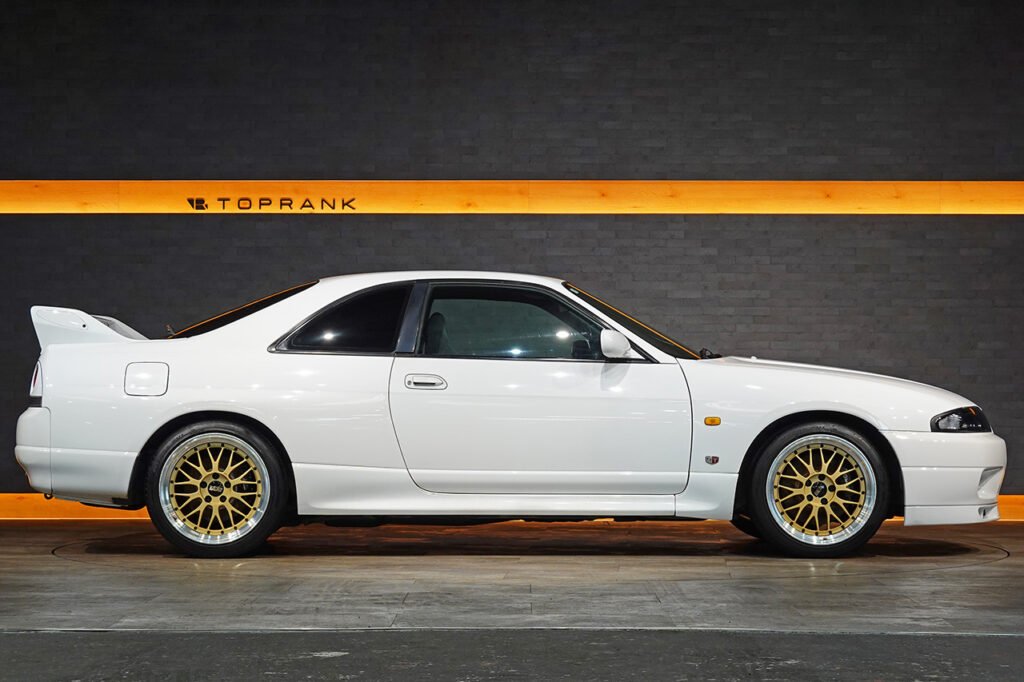
Three generations at a glance
The R32 revived the GT-R name in August 1989. Nissan records 29 wins from 29 Japanese Touring Car Championship races between 1990 and 1993, establishing the racing reputation that still surrounds the model. The R33 GT-R followed in January 1995 and the R34 GT-R in January 1999.
| Generation | Chassis code | GT-R introduction | Wheelbase |
|---|---|---|---|
| R32 | BNR32 | 1989 | 2,615 mm |
| R33 | BCNR33 | 1995 | 2,720 mm |
| R34 | BNR34 | 1999 | 2,665 mm |
These are GT-R introduction dates. The wider Skyline range did not always launch at the same time: an R34 Skyline registered in 1998 is not evidence of a 1998 factory GT-R.
What changes between them?
All three generations use the 2,568 cc twin-turbocharged RB26DETT inline-six, with a Japanese factory rating of 280 PS in the Nissan examples cited. That shared number does not make every engine or drivetrain identical, and it is not a measurement of a modified car’s current output.
The R32 combines the shortest wheelbase here with a five-speed manual. The R33 has a longer wheelbase; the R34 shortens it again and introduces a six-speed manual developed with Getrag, plus a multifunction dashboard display. These are useful differences to discuss before inspecting cars, rather than treating the generations as a simple ranking.
Modified suspension, tyres, differentials and engine calibration can substantially change the car you encounter. Compare the actual specification as carefully as the generation.
V-Spec, V-Spec II and Nür
Special-edition names need to be read in their generation context. The R33 V-Spec uses ATTESA E-TS Pro. For the R34, Nissan’s launch material distinguishes the standard car’s helical rear differential from the V-Spec’s active limited-slip differential; V-Spec also receives dedicated aerodynamic equipment.
The R34 V-Spec II arrived in 2000 with a carbon bonnet incorporating a NACA duct. The 2002 V-Spec II Nür and M-Spec Nür used engines based on N1 specification. A carbon bonnet, gold engine cover or badge can be fitted later, so none establishes the original version on its own.
Ask for the chassis identification, original model details and records supporting any special-edition claim. A NISMO 400R is a separate complete-car programme; see our 400R guide for the distinction.
Read the history as a sequence
Build a timeline from Japanese records, export documents, service invoices and later ownership paperwork. Where an instrument cluster has been replaced, look for the date and recorded distance at the change. A displayed odometer reading should not silently become a claim of independently verified lifetime mileage.
For engine work, request the workshop invoice, component list and calibration details. Establish whether the car retains its original engine configuration, and identify changes to the turbochargers, cooling, fuel system and gearbox. A large power claim requires supporting evidence and a discussion of the conditions under which it was measured.
Inspect the individual car
- Structure: examine the underside, corrosion, repairs, mounting points and panel alignment with detailed photographs and an inspection.
- Mechanical condition: assess the engine, cooling system, clutch, gearbox and differentials; investigate leaks, noises and warning lights.
- Control systems: verify the fitted four-wheel-drive and rear-steering equipment, including any modifications or removal.
- Originality: compare the interior, wheels and body equipment with the claimed version and record replacements.
Set the search around your intended use, acceptable modifications and maintenance budget. A documented car that meets those requirements is a stronger starting point than a generation or badge chosen without reviewing its condition.
Define your GT-R brief
Specify R32, R33 or R34, any preferred edition, acceptable modifications, the destination country and total budget. Tell us whether preservation or regular use matters most so the search and inspection can focus on your priorities.