Model · JDM models
Skyline GT-R R33: the one that lapped the Nürburgring in under eight minutes
Bigger and heavier than the R32, long in its shadow, and yet 21 seconds faster around the Nürburgring according to Nissan. What the R33 GT-R is, its versions, and what to check before buying one.
Published on · 7 min read · TOPRANK Europe
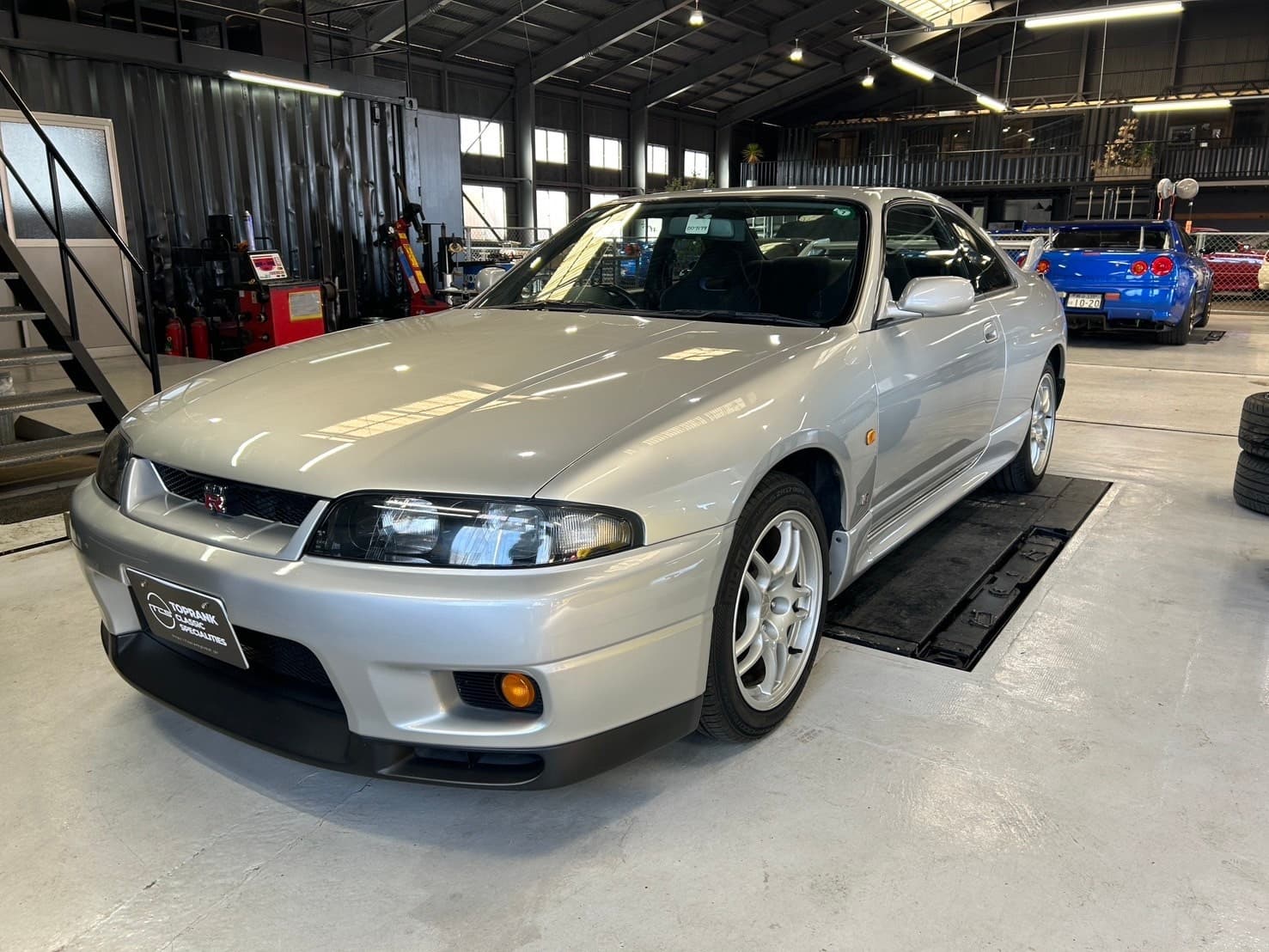
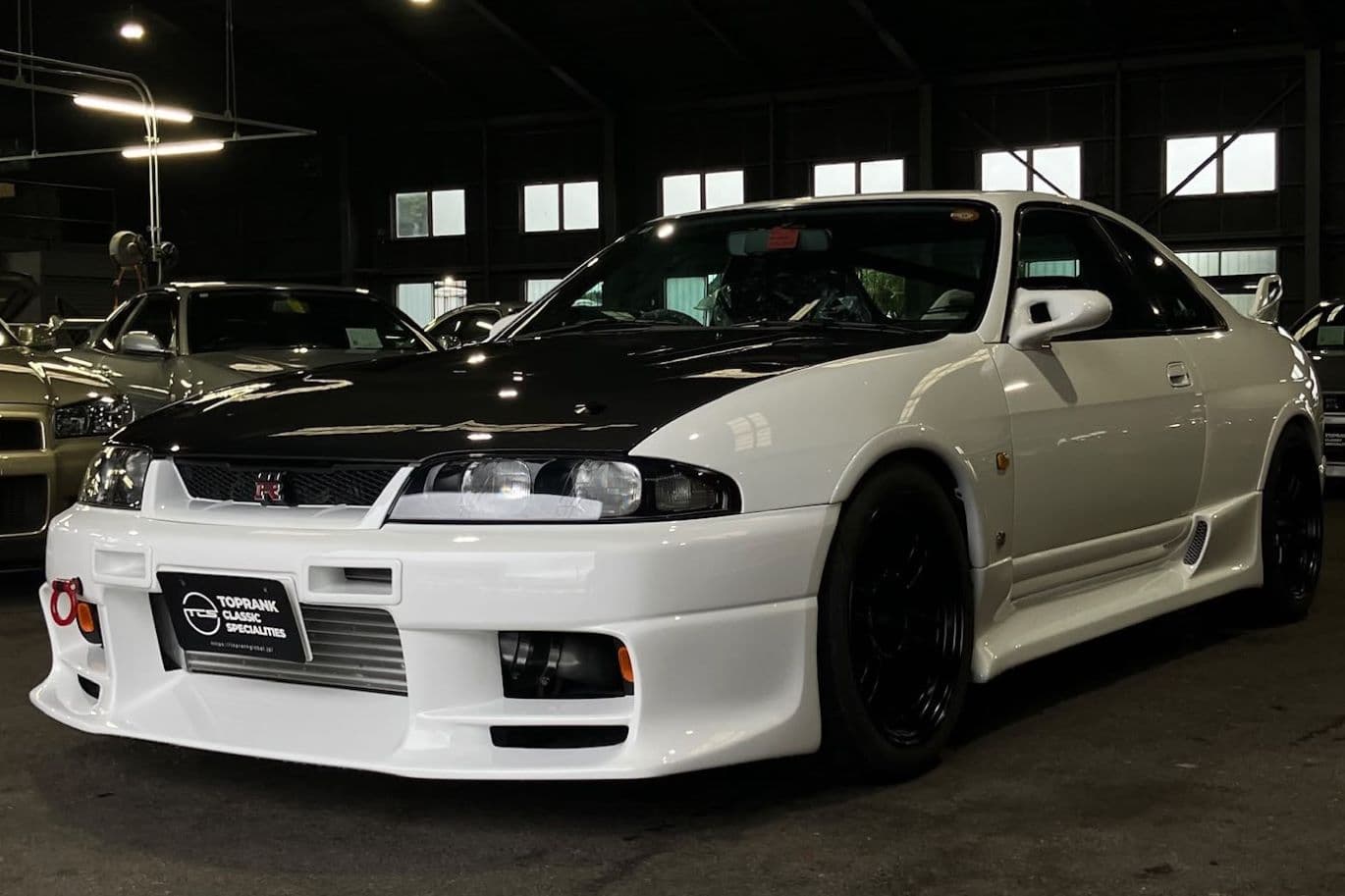
The ninth Skyline, the R33, arrived in August 1993. Its GT-R version took longer. Nissan showed it at the Tokyo Motor Show in the autumn of 1993 and put it on sale in January 1995. Its chassis code is BCNR33. It was built until November 1998.
It followed the R32, the car that won all 29 rounds of the Japanese touring car championship. That is a hard act to follow. Here is what the R33 brought, and why it deserves a second look.
Bigger, and the same engine
Nissan made the R33 larger. The wheelbase grew from 2,615 mm to 2,720 mm, and the car moved into the category of ordinary passenger cars in Japan. The engine stayed the RB26DETT: a 2,568 cc straight six with two turbos, still rated at 280 PS, the limit Japanese makers held themselves to at the time. The torque rose a little.
| R32 GT-R (1989) | R33 GT-R V-Spec (1997) | |
|---|---|---|
| Engine | RB26DETT, 2,568 cc | RB26DETT, 2,568 cc |
| Power | 280 PS at 6,800 rpm | 280 PS at 6,800 rpm |
| Torque | 353 Nm at 4,400 rpm | 368 Nm at 4,400 rpm |
| Length × width × height | 4,545 × 1,755 × 1,340 mm | 4,675 × 1,780 × 1,360 mm |
| Wheelbase | 2,615 mm | 2,720 mm |
| Weight | 1,430 kg | 1,540 kg |
| Tyres | 225/50 R16 | 245/45 ZR17 |
Figures from the Nissan Heritage Collection. The gearbox is a five-speed manual.
ATTESA E-TS Pro and the V-Spec
The R32 already used ATTESA E-TS: a rear-wheel-drive car that sends torque to the front wheels when the rear ones start to slip. Nissan adopted the ATTESA E-TS Pro for the R33 GT-R. The Pro adds an active limited-slip differential at the rear, controlled by the same computer, so the car also shares torque between the two rear wheels.
The V-Spec name started on the R32 in February 1993, with Brembo brakes and 17-inch BBS wheels. On the R33, the V-Spec keeps the same engine and power. According to Hagerty, it gets firmer springs and dampers and the active rear differential as standard. Nissan revised the car in early 1997.
Under eight minutes at the Nürburgring
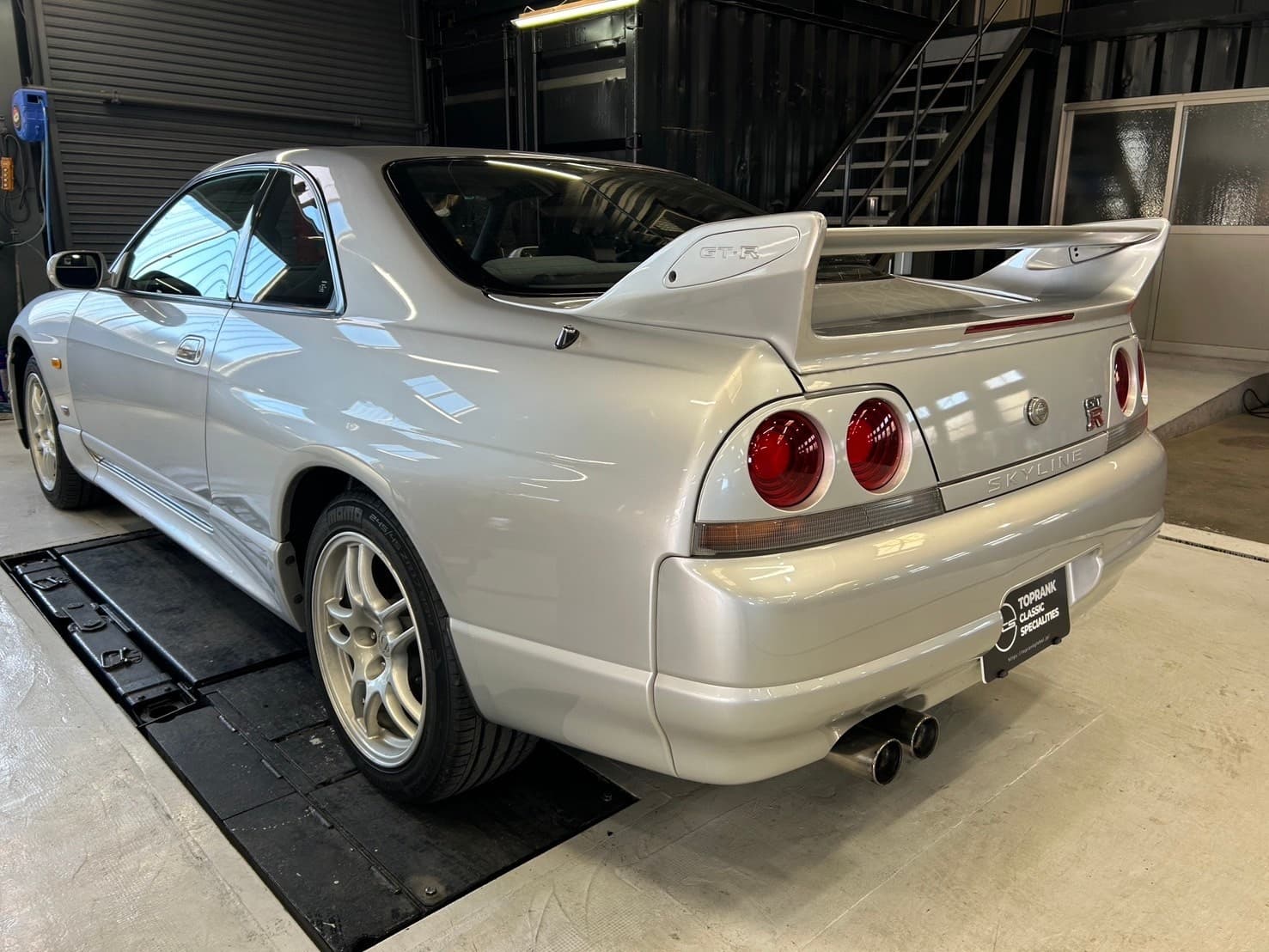
Before the launch, Nissan took a factory test car to the Nürburgring Nordschleife in Germany. According to the Nissan Heritage Collection, it lapped in 7'59"887, 21 seconds faster than the R32. Nissan built its advertising on it: “Fascinated by minus 21 sec.”
The special versions
- N1: a lighter version for Group N racing in Japan, built in very small numbers (fewer than 90, according to secondary sources).
- LM Limited (1996): made to mark Nissan's entry at the 24 Hours of Le Mans. 188 cars, in Champion Blue only, according to secondary sources.
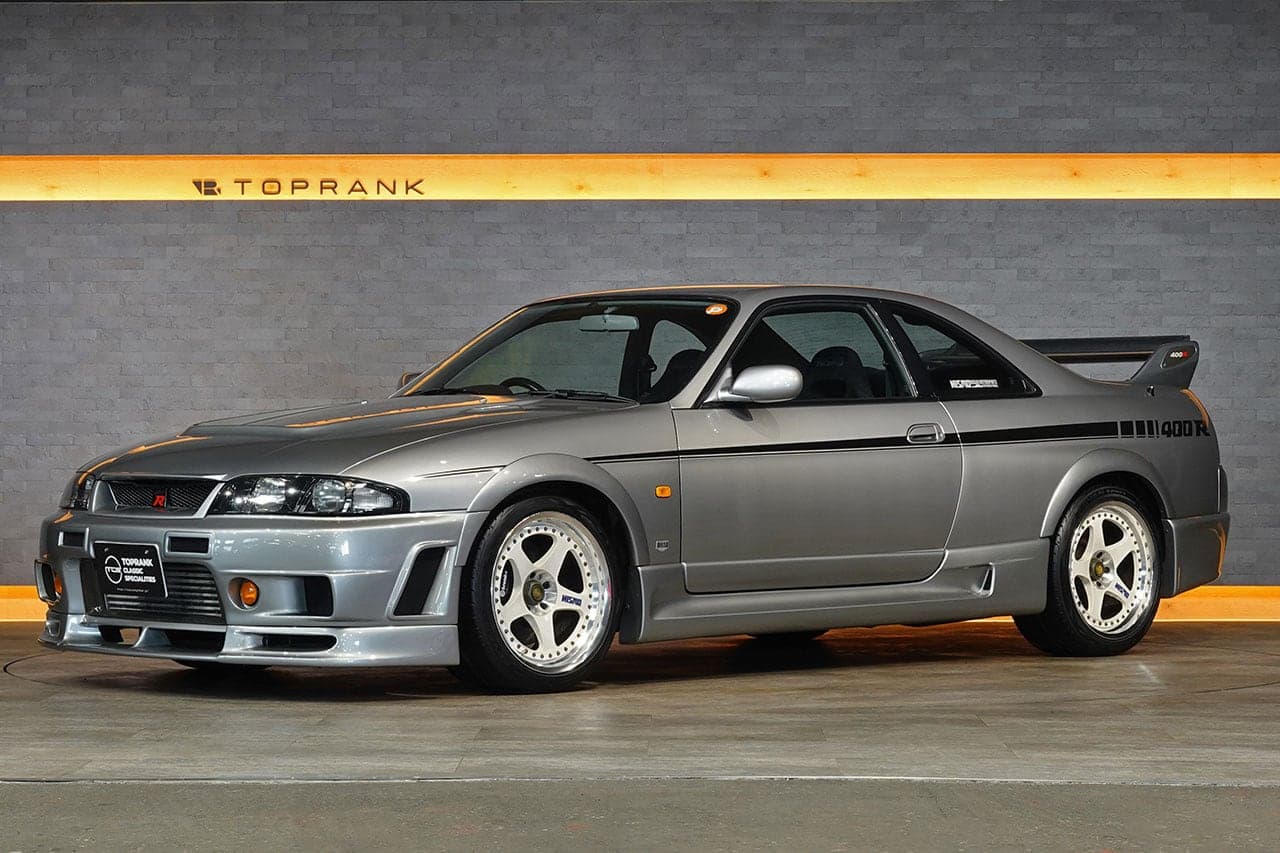
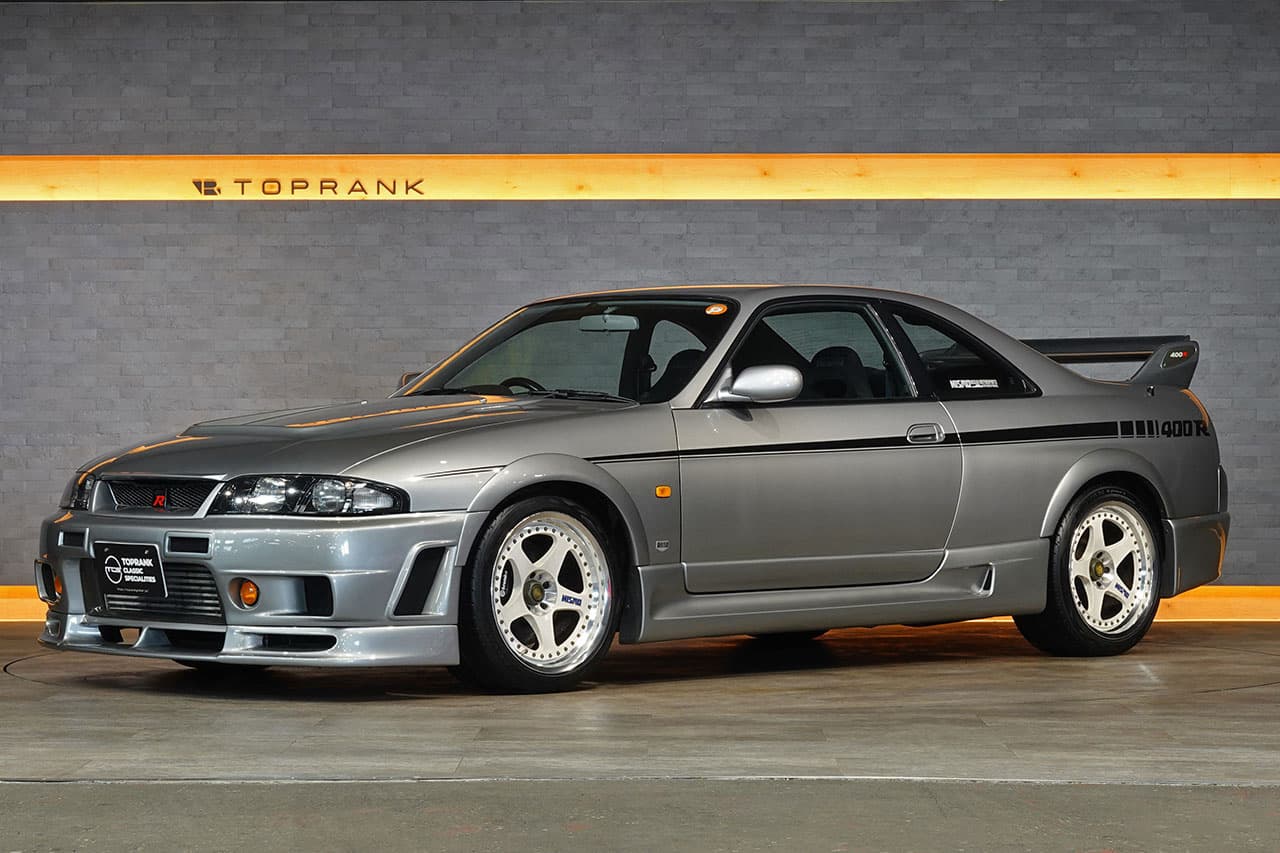
- NISMO 400R (delivered from 1996): a 2.8-litre engine and 400 PS. According to NISMO, 44 were built. We tell its story in a separate article.
- Autech Version 40th Anniversary (1998): a four-door GT-R for the Skyline's 40th anniversary, shown at the 1997 Tokyo Motor Show. New rear doors and rear wings copy the wide wings of the coupé. It was the first four-door Skyline GT-R since the 2000GT-R of 1969.
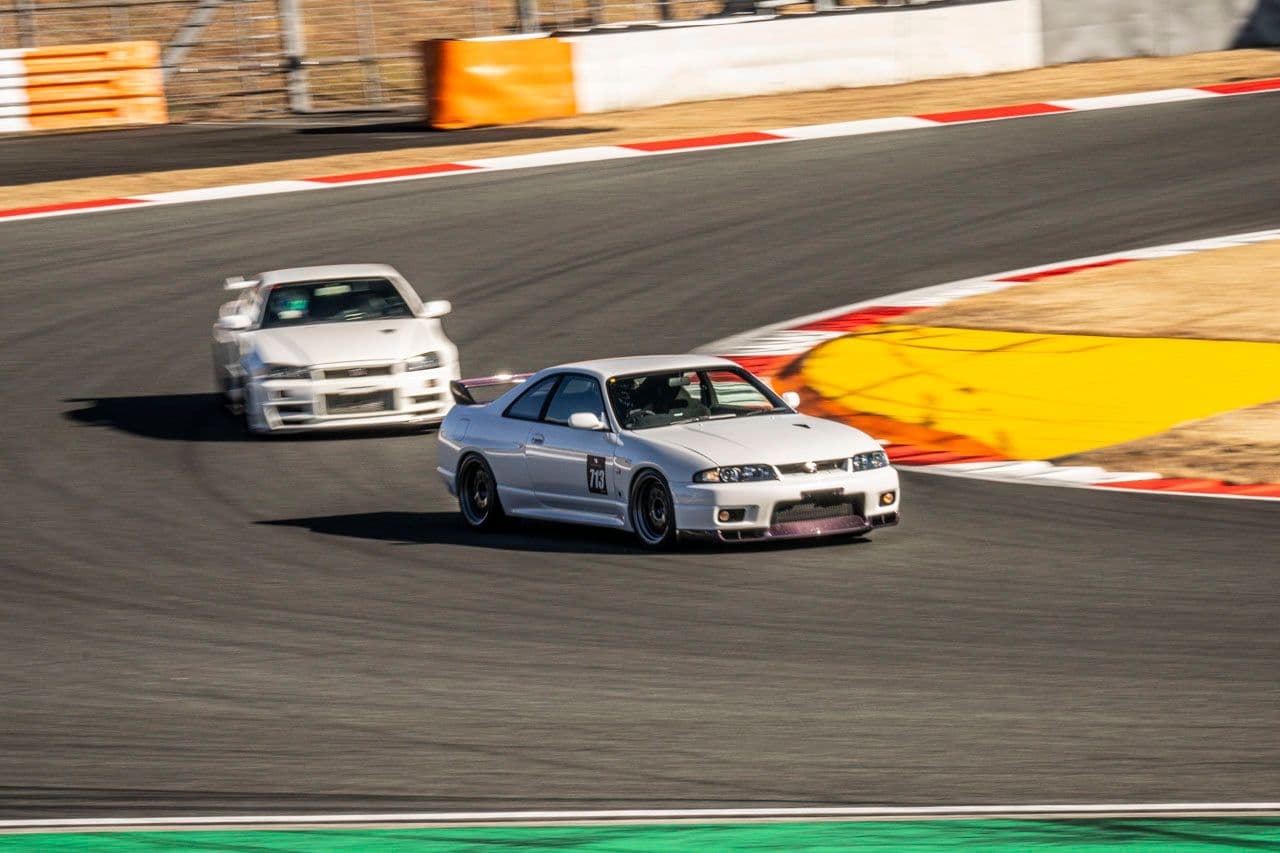
On track, a NISMO GT-R based on the R33 won the 1998 All-Japan GT Championship drivers' title with Érik Comas, according to Nissan.
Why it was less loved for so long
The R33 GT-R arrived after a legend and before another one. PistonHeads writes that it was relatively unloved to start with, and that it did not excite as much as the R32. Hagerty calls it under-appreciated rather than undiscovered, and notes that it slipped to the back of many minds once the R34 was offered in the United Kingdom.
The reasons usually given are its size and its weight: about 100 kg more than the R32. The same sources also list what the R33 improved: a stiffer body, bigger brakes and wider tyres. Nissan built about 16,700 R33 GT-Rs, against nearly 44,000 R32s.
What to check before buying one
The youngest R33 GT-R is now 28 years old. The buying guides of PistonHeads and Hagerty agree on these points.
- Rust: suspension turrets (they can rust from the inside), boot floor, sills, jacking points, boot lid and rear wheel arches.
- Engine: start it cold and listen for knocking. Check for oil mist at the breather. Timing belt about every 60,000 miles (about 100,000 km).
- Turbos: noise can mean worn bearings. The original turbos have ceramic exhaust wheels, which do not like high boost.
- Gearbox: grinding when changing gear points to worn synchros.
- ATTESA: on a wet road, under throttle, the front wheels must take their share. Listen to the rear differential.
- HICAS: the rear steering can fail; many cars have a delete kit fitted. Check for leaks.
- Electrics and interior: all gauges working, trim complete, genuine V-Spec equipment where claimed.
- Modifications: a tuned car needs a specialist check and clear papers on who did what.
The paperwork matters as much as the car. See how to read the history of a Japanese car.
Read: the history of a Japanese car
Importing an R33 into Europe
The first R33 GT-Rs turned 30 in 2025; the last ones will in 2028. From that age, a car in original condition can apply for collector status in France and an H plate in Germany. Many R33s have been modified. A modified car can still be registered, by another route. We tell you which one applies before you buy.
Questions and answers
Is the R33 GT-R slower than the R32?
On paper they share the engine and the 280 PS. At the Nürburgring, Nissan's own test car was 21 seconds faster than the R32.
Standard GT-R or V-Spec?
The V-Spec adds firmer suspension and the active rear differential. Hagerty sees it as the best all-round package. Check the documents: a badge proves nothing.
Were R33 GT-Rs sold in Europe when new?
Around 100 V-Specs were sold officially in the United Kingdom in 1997. The others were built for Japan.
Can you find one for me in Japan?
Yes. TOPRANK in Japan searches for the car, buys it in its own name and exports it. We support you from Colmar and handle the homologation.
Sources
The facts in this article come from the sources below.
- Nissan Heritage Collection — Skyline GT-R Nürburgring Time Attack (BCNR33)
- Nissan Heritage Collection — Skyline GT-R prototype, Tokyo Motor Show 1993
- Nissan Heritage Collection — Skyline GT-R V-Spec (1997)
- Nissan Heritage Collection — Skyline GT-R Autech Version 40th Anniversary
- Nissan Heritage Collection — Pennzoil NISMO GT-R, JGTC 1998
- Nissan Heritage Collection — Skyline GT-R (1989)
- Hagerty UK — Nissan Skyline GT-R R33 buyer's guide
- PistonHeads — Nissan Skyline GT-R (R33) used buying guide
- Wikipedia — Nissan Skyline GT-R (production figures, LM Limited)
- TOPRANK Global — 1995 Skyline GT-R BCNR33 (listing 105882)
Keep reading
Your plans
A question about your car?
Tell us what you are looking for. We answer in French, English or German.