Guide · Buying and importing
Paying for a car in Japan: how to send yen to TOPRANK Japan
Your car is invoiced in yen by TOPRANK Japan. Why, the two usual ways to send the money from Europe, how to enter a Japanese beneficiary, and how to avoid the fraud that targets transfers.
Published on · 6 min read · TOPRANK Europe
You have found your car in Japan. The next step is less exciting but just as important: paying for it. The invoice comes from a Japanese company, in yen. For many European buyers, it is the first time they have sent a large amount abroad in a foreign currency.
This guide explains why the invoice is in yen, the two usual ways to send the money, and the details that most often delay a payment.
Why the invoice is in yen
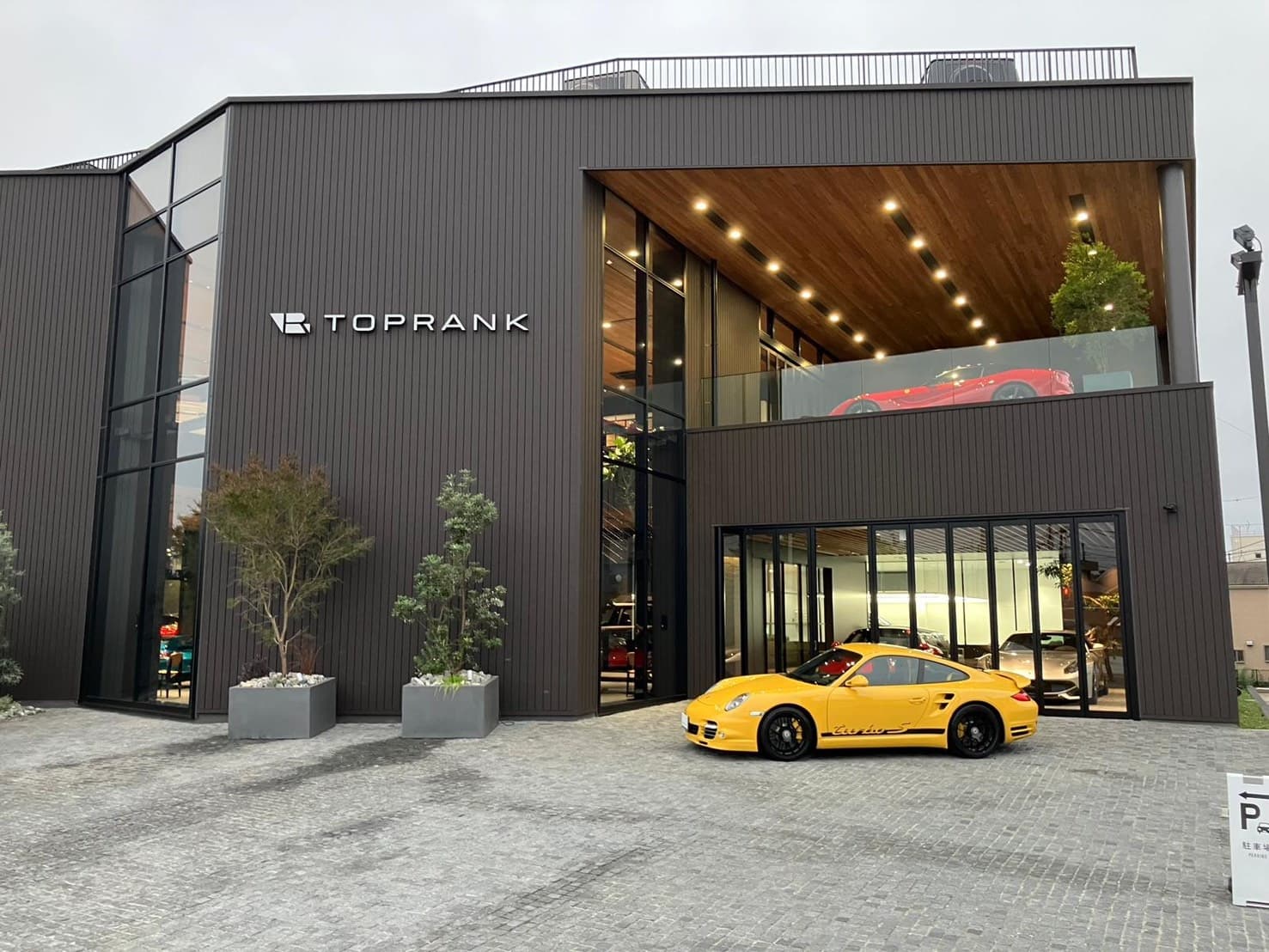
TOPRANK Japan, the Japanese company of the TOPRANK group, buys the car in Japan in its own name, at trade auctions or from its other sources, and exports it. It therefore invoices the car in yen, whatever the source. At auction, the invoice is CIF.
TOPRANK Europe, in Colmar, presents the cars, manages your file and invoices its own service, your pack, in euros. So you usually make two kinds of payment: one in euros to TOPRANK Europe, and one in yen to TOPRANK Japan for the car and the fees in Japan.
Two usual ways to send yen
- An international transfer from your own bank. You give your bank the beneficiary's details and the amount. The transfer goes through the international banking network, usually called SWIFT.
- A specialised money-transfer service. You pay the service in euros, and it pays the beneficiary in yen in Japan.
Both are legitimate. What differs is how the cost is built, and how much you can see before you confirm.
| Point | What to check on the day |
|---|---|
| Exchange rate | The rate applied to your euros. It can differ from the rate you see in the news. Look at the amount in yen that will actually arrive. |
| Fees | Your bank's fee, a possible fee from an intermediary bank, and the receiving bank's fee. Ask who pays which. |
| Speed | Each provider gives its own estimate. A large first payment can trigger extra checks. |
| Limits | Daily or per-transfer limits, and the documents required for large amounts. |
| Beneficiary name | Some routes ask for the name in Latin letters, others for the name held by the Japanese bank, usually in katakana. |
We do not give figures here: rates and fees change every day. Compare the amount received in yen for the same amount in euros, on the day you pay.
A service we suggest: Wise
Wise is a money-transfer company. In the European Union, the service is provided by Wise Europe SA, a Belgian company that Wise describes as an authorised payment institution supervised by the National Bank of Belgium, with passporting rights across the European Economic Area.
Wise is not a bank. It states that it safeguards customers' money in a mix of cash held in commercial banks and low-risk liquid assets, and that its payment services are not covered by the Belgian deposit guarantee scheme.
What makes it practical for a payment to Japan: Wise shows the fee and the exchange rate before you confirm the transfer. For a local payment in Japan, it asks for the Japanese account details, including the account name as the bank holds it, usually in katakana.
Open a Wise account with the referral link
How to enter TOPRANK Japan as beneficiary
A Japanese bank account carries its holder's name in katakana, the Japanese syllabary used, among other things, for foreign words and company names. When a service pays into a Japanese account locally, the name you type must match the name held by the bank. Japanese banks warn that a single different character can stop the money from being credited.
So never retype the name from memory and never guess it. Copy it from the details TOPRANK Japan gives you.
We do not publish TOPRANK Japan's bank details on this page, so that they cannot be copied and misused. Your TOPRANK contact sends them to you and confirms them by phone.
For an international bank transfer, your bank will usually ask for the name in Latin letters and the SWIFT code. For a local payment through a service like Wise, it will ask for the account name in katakana, the bank, the branch, the account type and the number.
The details that cause delays
- The beneficiary's name. It must match the bank account exactly. A missing word or a different spelling can block or return the payment.
- The reference. Write the reference your TOPRANK contact asks for, so that the payment is matched to your car without delay.
- The proof of transfer. Keep the confirmation your bank or service gives you, and send a copy to your TOPRANK Europe contact.
- The timing. A large international payment can be checked by your bank or by the service. Do not leave it until the last day.
Fraud: the risk to know about
A known fraud targets exactly this kind of payment. A criminal pretends to be the company you are about to pay, often from a hacked or look-alike e-mail address, and sends you an invoice or a message with new bank details. The money goes to an account the criminal controls.
- Never pay to bank details that arrived by an e-mail you have not checked.
- Check by phone, using a number you already know, for example the one on our website or in your earlier exchanges. Never use a number given in the suspicious message.
- Be wary of urgency. Pressure to pay quickly is a classic warning sign.
- If you have paid by mistake, alert your bank immediately to try to stop the transfer, keep all the evidence and file a complaint with the police.
Questions
Can I pay TOPRANK Japan in euros?
The car is invoiced in yen by TOPRANK Japan. Ask your TOPRANK Europe contact before you pay if you have a particular case.
Do I have to use Wise?
No. It is one option among others. An international transfer from your own bank works too.
Why does the name have to be in katakana?
Because that is how the Japanese bank holds the account name. For a local payment in Japan, the name must match it exactly. For an international SWIFT transfer, the name in Latin letters is usually asked for.
I received an e-mail with new bank details. What should I do?
Do not pay. Call your TOPRANK Europe contact on a number you already know, and check the details with them first.
Sources
The facts in this article come from the sources below.
- Wise — Send money to Japan (rate, fees shown upfront, Japanese account details)
- Wise Help Centre — Guide to JPY transfers
- Wise Help Centre — How is Wise regulated
- Wise Help Centre — How Wise Europe SA safeguards customer funds
- Wise — Imprint (Wise Europe SA)
- SMBC — transfer help: the recipient's name must match (Japanese)
- Cybermalveillance.gouv.fr — Fraude au virement (faux RIB), fiche réflexe
- Europol EC3 — #CyberScams, invoice fraud (German)
Keep reading
Your plans
A question about your car?
Tell us what you are looking for. We answer in French, English or German.