


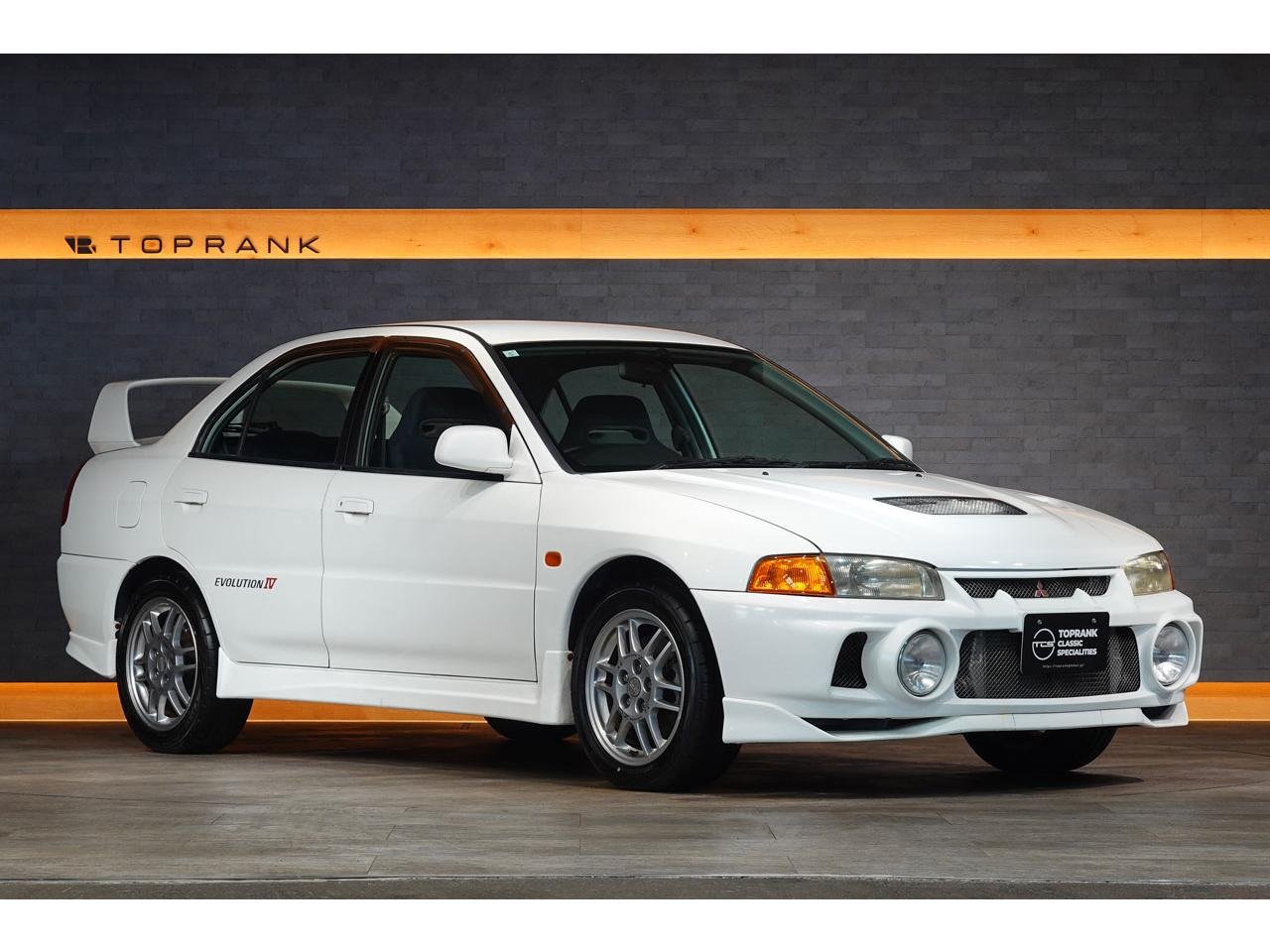
1) Why 30 years matters for import & registration in Europe
In many European countries, the 30-year threshold can unlock “historic/collection” routes that may simplify paperwork if the car is in historically correct/original condition. In France, for example, the Service-Public guidance states a “carte grise de collection” is possible for vehicles over 30 years old, no longer produced, and not technically modified. (See Sources below.)
Important
Rules vary by country and by vehicle condition. If you want, we can tailor an Evo IV import plan for your exact destination and intended use.
2) Evo IV specs the quick enthusiast overview
Evo IV (1996–1998) is built on the CN9A platform and powered by the 2.0L turbocharged 4G63T. Output is commonly quoted at the Japanese “gentlemen’s agreement” level (280 PS / 276 hp) depending on source and market references.
| Item | Typical Evo IV (JDM reference) | Why it matters |
|---|---|---|
| Engine | 4G63T 2.0L turbo (inline-4) | Iconic tuning platform with huge parts support |
| Power / torque | ~280 PS (JDM cap) / ~353 Nm (varies by listing) | Strong mid-range + rally-bred response |
| Drivetrain | Full-time AWD | Traction and confidence on road and circuit |
| Key tech | AYC standard on GSR | Yaw control helps rotation and cornering stability |
| Body width | ~1690 mm (narrow-body era) | V is the “widebody jump” (see below) |
Layout change (big Evo IV milestone)
Evo IV rotated the engine/transaxle layout to improve weight balance (often described as a major engineering step compared to Evo I–III).
3) RS vs GSR two characters, one legend
JDM Evo IV is commonly found in RS and GSR. Think of RS as “motorsport base / lighter spec”, and GSR as “road performance with tech”.
- GSR: AYC-equipped, more comfort/sport interior equipment (street-focused performance).
- RS: more “competition-minded” spec (weight-saving tendencies depending on exact configuration).
4) Evo IV vs Evo III what changed
Evo IV is the start of the “new generation” evolution: redesigned platform and a different engineering direction.
| Topic | Evo III | Evo IV |
|---|---|---|
| Generation | Earlier Lancer platform (Evo I–III era) | New platform (CN9A) + reworked layout |
| Signature tech | Traditional AWD/LSD approach | AYC introduced on GSR |
| Driving feel | Raw, mechanical, classic homologation feel | More “modern Evo” rotation and stability thanks to AYC |
5) Evo IV vs Evo V widebody and rally-era evolution
Evo V is the “widebody jump” and a response to the changing rally environment of the late 1990s. Mitsubishi Motors’ own WRC history pages explain the motivation: Group A Evo IV was narrower than the new WRC maximum width, so Mitsubishi expanded the production width for the next generation.
| Topic | Evo IV | Evo V |
|---|---|---|
| Body | Narrow-body (~1690 mm) | Widebody (~1770 mm class) |
| Chassis focus | New gen platform + AYC launch | More stability/grip from width/track changes |
| Market identity | First “modern layout” Evo | The aggressive-looking widebody Evo many people picture instantly |
6) What makes JDM Evo IV special why enthusiasts hunt Japan cars
When people say “JDM Evo”, they usually mean:
- Correct trim mix: RS/GSR configurations that match Japan market lineup.
- Auction transparency: structured inspection culture (auction sheets, grading, mileage systems).
- Parts culture: Japan has deep ecosystem for correct maintenance and period parts.
Toprank note
For classic Evos, the biggest risk is not “spec” — it’s condition: rust/structure, tuning quality, and repair history. That’s why we focus on inspection notes and the right evidence before buying.
7) Evo IV vs base Lancer what makes it a true homologation special
Evo IV starts from the Lancer platform, but the Evo is a performance program — engine, AWD hardware, chassis, and aero focus are fundamentally different from a base commuter Lancer.
- Turbo AWD powertrain built for rally performance
- Chassis and drivetrain upgrades (including AYC on GSR)
- Motorsport DNA proven in rally environments
8) Rally history & palmarès Evo IV in the WRC era
Mitsubishi’s official motorsports recap for the 1997 WRC season states Tommi Mäkinen took four wins that year: Rally Portugal, Rally Catalunya (Spain), Rally Argentina, and the 1,000 Lakes Rally (Finland). The same page notes this included Mitsubishi Motors’ first asphalt rally victory (Catalunya, held as all-tarmac for the first time). (See Sources.)
Why this matters for the Evo IV story
Evo IV isn’t just a “cool road car”. It’s part of a championship era where the Evolution line helped win multiple driver titles across 1996–1999.
Want to source an Evo IV from Japan the right way?
Toprank Europe combines Japan sourcing capability with a European company and local communication. We filter by condition first (rust/structure, sheet notes, history), then spec, then budget — so you avoid “cheap cars that become expensive”.
Sources for key claims in this article
- Mitsubishi Motors – WRC 1997 recap (wins listed)
- Mitsubishi Motors – WRC 1998 recap (width/next-gen reasoning)
- Evolution IV overview (layout rotation, AYC on GSR, RS/GSR concept)
- Toprank Global – Evo IV AYC explanation (context)
- France: Service-Public – Carte grise véhicule de collection (30 years rule)
- FFVE – Attestation for collection registration (France)
Replace the hero image
For perfect reliability (no broken images), replace the placeholder image with a photo hosted in your toprankeurope.com Media Library.